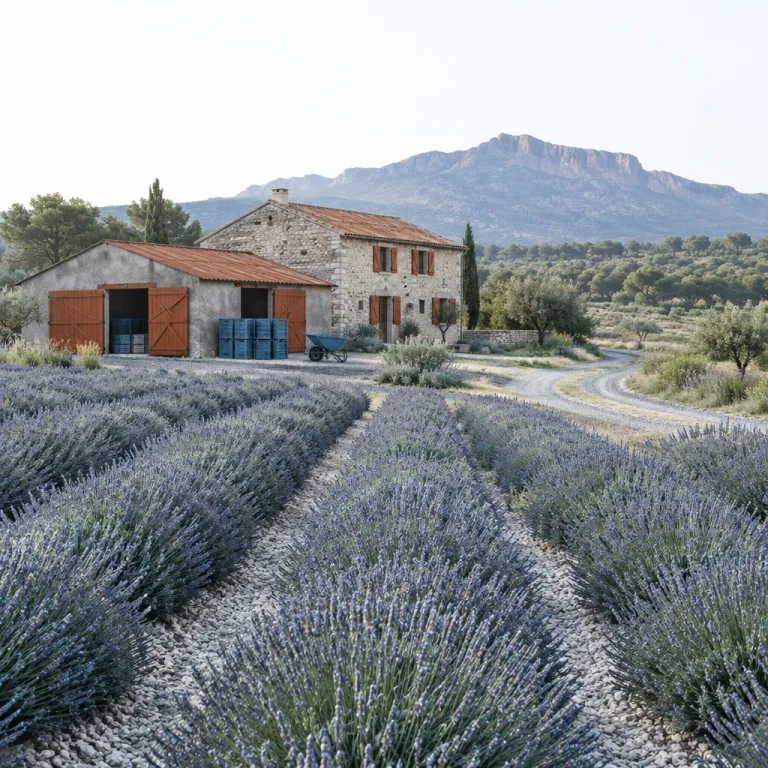
Reading the season: timing your lavender fields near Aix-en-Provence
Lavender fields near Aix-en-Provence start to bloom earlier than those in the higher villages of Haute-Provence. By late June the Provençal landscape around Aix, the Luberon and the Valensole Plateau usually shifts from green to violet, and peak colour often runs through the first half of July before harvesting accelerates. If you plan a romantic escape, aim to book your stay in Aix-en-Provence for the window from late June to mid July, when the fragrant rows are at their best and the light is soft enough for photography at both sunrise and the golden hour.
Touring these lavender fields works best when you think in elevation bands rather than a single date. Lower areas around the Valensole Plateau and the road between Manosque and Valensole often bloom first, while higher plateaus such as Sault and the hills above Apt can reach full colour one to two weeks later. This staggered bloom means that a couple basing themselves in a luxury hotel in Aix-en-Provence can plan more than one countryside escape, returning to different areas as June and July unfold and the lavender production cycle moves from first flowers to the start of cutting.
Within about thirty minutes of the city centre of Aix-en-Provence, two estates make an elegant warm up before you drive deeper into Haute-Provence. Terre Ugo – Maison de Lavande (Chemin de la Diligence, 13540 Aix-en-Provence; terre-ugo.com), with around 30,000 lavandin plants, offers shaded relaxation areas, on-site workshops and a gentle introduction to fine lavender varieties without leaving the Aix area. Nearby, Le Lavandin (Route de Couteron, 13540 Aix-en-Provence; le-lavandin.com) spreads across roughly seven hectares of fragrant fields, where self-guided tours lead you past rows of Provençal lavender and into a small shop that is ideal for picking up oils and soaps before your full day in the more remote fields around Valensole or the Sault plateau.
Valensole plateau and Sénanque abbey: iconic fields within reach of Aix
For many travellers, the Valensole Plateau is the image that defines lavender fields near Aix-en-Provence. From Aix, you will reach this area in about an hour to seventy minutes by car, and the most rewarding route runs via the D6 and the smaller lanes that loop between Valensole village and Puimoisson, where fragrant fields roll away towards the distant Alps. Arrive early in the day for the best light, because coaches and group tours start to appear by mid morning and the quietest photography spots quickly feel busy.
Here, lavender production is not a postcard but a serious agricultural activity, and you will see both fine lavender and lavandin grown in long, perfectly aligned rows. Many farms, such as Lavandes Angelvin (Route de Manosque, 04210 Valensole; lavandes-angelvin.com) and Domaine Lavandais (Route de Gréoux, 04210 Valensole; domainedulavandais.com), open their doors for a short visit or tasting, and a few distilleries explain how the essential oil is extracted and why Haute-Provence terroir matters for quality. Combine a full day on the Valensole Plateau with stops at honey producers, where bees work the same fields that you have just photographed, and you can taste the difference between single-origin lavender honey and blends from wider Provence.
On another day, drive from Aix-en-Provence towards the Luberon to visit the Abbaye de Sénanque, where stone walls rise directly from the surrounding lavender fields. The abbey is still a working Cistercian monastery, so visiting rules are strict; check opening hours on the official abbey website, book timed tickets in advance in high season, dress modestly and keep voices low while you walk the paths that frame the most famous view of Provence lavender. Parking is signposted below the abbey, photography is allowed only from designated areas, and early morning or late afternoon offers the best balance of light and calm. If you prefer to return to a refined base after your countryside experience, consider one of the elegant country house hotels featured in this guide to the best hotels in Provence for a refined stay.
Quieter routes: Sault, Simiane-la-Rotonde and the Luberon backroads
Couples who prefer space and silence often find that the higher plateaus around Sault and Simiane-la-Rotonde suit them better than the busier lavender fields near Aix-en-Provence on the Valensole Plateau. Sault’s fields sit at around 800 metres, so they bloom later in relative terms, usually reaching their best one to two weeks after the lower areas around Valensole and Sénanque. This later timing means that a stay in Aix-en-Provence in mid July can still include a full day trip to Sault, when many lower fields near Valensole are already being cut.
The drive from Aix through the Luberon towards Sault is part of the pleasure, especially if you take the smaller road between Apt and Rustrel, where pockets of fragrant fields appear between ochre cliffs and vineyards. Plan your day so that you reach Sault in time for a relaxed village lunch, then wander the plateau on foot in the afternoon when the crowds thin and the light softens again. Around Simiane-la-Rotonde, fine lavender dominates, and the mix of stone hamlets, Haute-Provence panoramas and quieter tracks makes this area ideal for couples who want to feel alone among the rows.
On the return to Aix-en-Provence, you can stop in one of the Luberon villages for an olive oil tasting or a glass of rosé on a shaded terrace, turning a simple countryside drive into a layered Provence day. If you are planning a longer itinerary that combines lavender fields with the Mediterranean, this Provence Bleue escapes guide outlines refined stays between Aix and the Blue Coast that pair well with inland routes. Whatever route you choose, remember that weekdays are the best time to visit, because weekend traffic from Marseille and local towns can slow even the most carefully planned tours.
Staying in Aix: luxury bases and curated lavender day trips
Choosing the right hotel in Aix-en-Provence is the quiet key to enjoying lavender fields near the city without fatigue. Many of the city’s luxury and premium properties now work closely with local drivers and guides, so their concierge teams can arrange a private excursion that matches your pace, whether you prefer a half day around Terre Ugo and Le Lavandin or a full day circuit through Valensole, the Luberon and Sault. When you book, ask explicitly whether tours will include early starts, shaded picnic stops and time in villages, not just quick photo breaks in the fields.
Some hotels in Aix-en-Provence also coordinate with farms for workshops, from soap customization to short introductions to lavender production and distillation. As one local information sheet puts it, “Visit during peak bloom for the best experience. Wear comfortable clothing and sun protection. Check farm websites for opening hours and events.” These practical details matter, because a day out in June or July can involve strong sun, uneven ground between rows and long stretches without cafés or shade.
For couples travelling with children or planning multigenerational stays, the most relaxed strategy is often to alternate a full countryside excursion with a slower day in town. You might spend one morning in the fragrant fields of Terre Ugo, then return to Aix-en-Provence for a calisson workshop or a market stroll, using resources such as this guide to family friendly Aix experiences to balance your programme. The next day, a driver can take you out to the Valensole Plateau or the Haute-Provence hills, following a simple loop from Aix to Manosque, Valensole and back via the Luberon, leaving you free to watch the light shift across Mont Sainte-Victoire as you return to your hotel pool and a late dinner reservation.
FAQ
When is the best time to visit lavender fields near Aix-en-Provence ?
Late June to July is the peak blooming period for most lavender fields near Aix-en-Provence, especially around Valensole and the Luberon. Higher areas such as Sault often reach their best slightly later, so you can still see strong colour into late July. August usually marks the start of widespread harvesting, so fields look more patchy by then.
How far are the main lavender areas from Aix by car ?
The Valensole Plateau sits roughly one hour to seventy minutes northeast of Aix-en-Provence, while the Abbaye de Sénanque and central Luberon villages are usually reached in about seventy to ninety minutes, depending on traffic. Sault and Simiane-la-Rotonde take a little longer, often around ninety minutes to two hours, but reward the drive with quieter fields and cooler air. Closer to town, Terre Ugo and Le Lavandin lie within about thirty minutes of the city centre.
Are there guided tours from Aix, or should we drive ourselves ?
Both options work well for couples staying in luxury hotels in Aix-en-Provence. Many properties can arrange a private driver or small group excursion with local operators, which removes the stress of navigating country roads and parking near popular fields. Confident drivers who prefer flexibility can rent a car and follow suggested routes, combining Valensole, the Luberon and Sault over several days.
Can we buy lavender products directly from the farms ?
Yes, most farms in Haute-Provence and around Aix-en-Provence sell their own products, from essential oils and soaps to honey and small home items. Terre Ugo and Le Lavandin both have on-site shops where you can sample and purchase Provence lavender goods after walking through the fields. Buying directly supports local producers and often gives you fresher, better traced products than generic souvenir outlets.
Do lavender farms near Aix offer workshops or special experiences ?
Several estates around Aix-en-Provence and in the wider Haute-Provence area run seasonal workshops, especially during the main bloom from late June to July. Activities can include soap customization, short introductions to distillation and relaxed picnics among the rows, sometimes extending into early August if the weather allows. Always check each farm’s schedule before you visit, because availability changes with the harvest calendar.