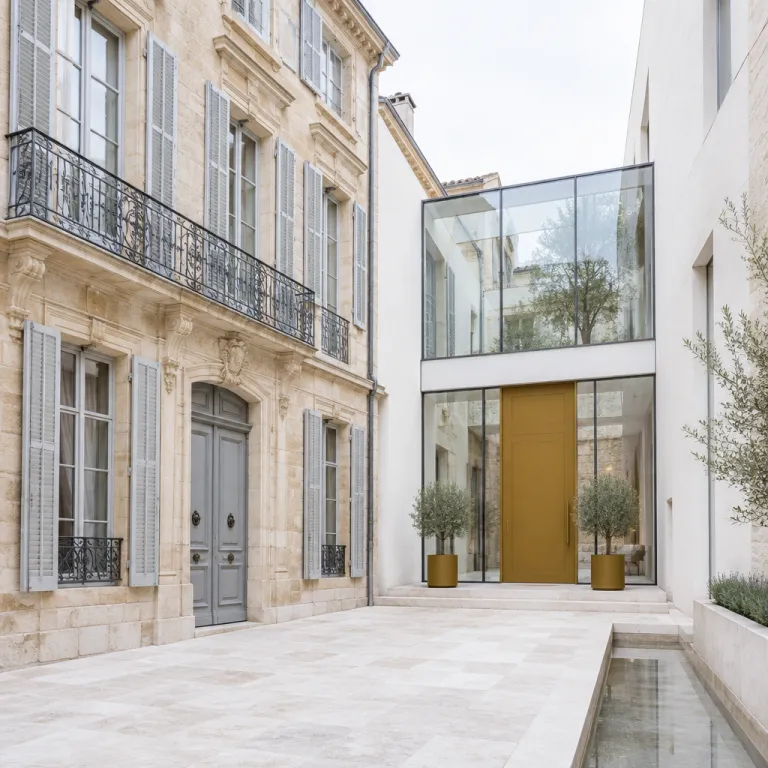
Hotel architecture in Aix-en-Provence as a living gallery
Hotel architecture in Aix-en-Provence is inseparable from the city’s light and limestone. In the historic center of Aix Provence, more than 150 façades of every hôtel particulier tell a story of France through carved mascarons, wrought iron balconies, and quiet inner courtyards that now frame a pool or spa instead of a carriage yard. When you book a hotel here, you are choosing not only rooms and suites, but also a particular view on Provençal history and art architecture.
The transformation of these mansions into luxury hotels has been deliberate rather than decorative. Local architects and interior designers have treated each architecture project as a careful dialogue between original stone staircases, contemporary art, and the expectations of a five star hotel with reliable room service and a serene swimming pool or outdoor swimming terrace. This adaptive reuse of heritage buildings has turned hotel design in Aix-en-Provence into a reference point across Provence France for how to balance conservation with modern comfort.
Two properties crystallize this evolution. The Renaissance Aix-en-Provence Hotel, a contemporary property that opened in 2014 just beyond the old town on Avenue Mozart, shows how a new build can echo the rhythm of a traditional Provence hotel while embracing bold lines and large scale art, including a lobby collection curated around local painters. In contrast, Hôtel de Boisgelin, originally drawn in the seventeenth century by architect Pierre Pavillon with sculptural work attributed to Jean-Claude Rambot according to the Aix heritage department, remains a pure hôtel particulier where visitors can still read the period in every cornice, even as some salons now host cultural events linked to nearby hotels and galleries.

Villa Gallici, Le Pigonnet and the garden tradition of Provence
On the northern edge of Aix, Villa Gallici on Avenue de la Violette feels like a villa lifted from an opera set, yet its architecture is firmly rooted in Provence. This former villa with terraced gardens has been reimagined as a Provence hotel where each room and suite opens to a view of cypress, stone balustrades, and a pool framed by statues that echo the art and architecture of Italianate bastides across Provence France. Inside, the luxury design leans into art luxury with patterned fabrics, curated photos, and antiques that make the rooms feel collected rather than staged.
Le Pigonnet, a short walk from cours Mirabeau on Avenue du Pigonnet, extends this garden hotel tradition with a more restrained façade and a deeper connection to art. Paul Cézanne painted Mont Sainte-Victoire from these grounds, and today guests can stay in a suite whose windows frame almost the same view, while the hotel spa and pool are tucked into the landscape so the architecture never overwhelms the garden. For travelers comparing hotels in Aix Provence, this is where hotel architecture in Aix en Provence becomes a lens on painting, with paths leading from shaded rooms to the exact place where an easel once stood.
These properties also work as strategic bases for exploring the wider region. From Villa Gallici or Le Pigonnet, you can plan vineyard visits and tasting rooms in nearby Palette and the countryside, using guides such as the dedicated overview of Palette’s wine estates and vineyard stays. Returning after a day among vines and châteaux, the contrast between rural stone farmhouses and the refined architecture project of your place hotel in town sharpens your sense of how Provence, France, expresses itself through buildings as much as through wine.

Convents, townhouses and the quiet drama of the old town
Step back into the dense streets behind cours Mirabeau and hotel architecture in Aix en Provence becomes more introspective. Hôtel des Augustins occupies a twelfth century Augustinian convent, where original stone arches now frame the lobby and lead to rooms that balance monastic simplicity with the expectations of a modern Provence hotel, including reliable room service and well considered lighting. Staying here, you feel the thickness of the walls and the way the architecture edits sound, turning the bustle of Aix into a distant murmur.
Across the old town, several hôtels particuliers have been converted into intimate hotels that retain ceremonial staircases, painted ceilings, and hidden courtyards. Each hotel particulier turned hotel offers a different interpretation of art architecture, from minimalist interventions that leave plasterwork untouched to bolder luxury design gestures that introduce contemporary art and sculptural lighting into historic rooms and suites. For solo travelers, these places offer a rare chance to stay inside buildings that locals usually only see from the street, with every room acting as a private gallery of photos, objects, and views over tiled roofs.
Not all of the city’s architectural drama is grand. L’Escaletto, with its forty four rooms and panoramic terrace after a recent renovation, shows how a place hotel can feel both urban and relaxed, with a small pool and outdoor swimming deck that look across the rooftops of Aix Provence. Families and solo explorers alike can pair such a stay with hands on cultural experiences, using resources like this guide to calisson workshops and lavender field excursions, then return to a hotel where the architecture quietly frames the sunset.

Château La Coste, Villa Saint-Ange and the new Provençal modernism
To understand how hotel architecture in Aix en Provence engages with contemporary design, you need to leave the ring road and head into the countryside. At Château La Coste near Le Puy-Sainte-Réparade, the landscape of vines and low hills hosts an extraordinary collection of pavilions and installations by architects such as Tadao Ando, whose concrete forms have redefined how art and architecture sit in the Provençal landscape. Here, the château, the art, and the on site hotel and villa style accommodations form a single architecture project where every room, suite, and pool is oriented toward a specific artwork or view.
This is where names like Château La Coste and Villa Coste have become shorthand among design focused travelers for a particular kind of Provence France experience. Guests move between a hotel spa, a swimming pool edged with stone, and galleries where art luxury is expressed through both sculpture and the precision of the buildings themselves, making the stay feel like inhabiting a curated exhibition. The presence of a chateau, a villa, and contemporary pavilions on one estate also shows how the region’s architecture can stretch from medieval to ultra modern without losing its sense of place.
Closer to Aix, Villa Saint-Ange on Avenue Jules Isaac offers another perspective on this new Provençal modernism. Set in a former private villa, it has been expanded into a star hotel where the façades respect the original lines while the interiors introduce a calm, contemporary language, especially in the spa and pool areas. The integration of a full hotel spa, generous rooms and suites, and discreet room service into a historic shell demonstrates how hotel architecture in Aix en Provence can meet international expectations without erasing the memory of the building.

Hidden architectural gems and how to choose your stay
Beyond the headline names, some of the most rewarding encounters with hotel architecture in Aix en Provence happen in smaller properties and unexpected places. A modest Provence hotel on a side street off cours Mirabeau might reveal a seventeenth century staircase, a vaulted breakfast room, or a tiny courtyard with a plunge pool that once served as a cistern. In these hotels, the luxury design is often expressed through proportion, light, and carefully chosen art rather than through scale or spectacle.
For travelers, the key is to match the architecture to the kind of stay you want. If you are drawn to the quiet grandeur of a hotel particulier, look for hotels that highlight their historic rooms, original photos, and period details, even if the spa or swimming pool is modest. If you prefer a more resort like rhythm, estates near Le Puy-Sainte-Réparade or the Sainte-Victoire area, including Château La Coste and other châteaux with villas and pools, will give you space, outdoor swimming options, and a stronger connection to the wider Provence landscape.
It also helps to think in terms of geography. A place hotel within the old town of Aix Provence puts you steps from markets, galleries, and the shaded terraces of cours Mirabeau, while a villa or château stay outside town, such as at Château La Coste or a villa near Sainte-Réparade, trades immediacy for horizon lines and vineyard views. For itineraries that combine city architecture with coastal landscapes and art, resources like this curated guide to refined stays between Aix and the Blue Coast can help you link hotels, villas, and châteaux into a coherent journey through Provence, France.

Heritage, innovation and what makes Aix’s hotels feel authentic
The most compelling hotel architecture in Aix en Provence succeeds because it feels anchored rather than imported. Renovations of hôtels particuliers and châteaux have relied on traditional craftsmanship, from stone carving to ironwork, while integrating modern construction techniques, art installations, and carefully engineered pools and spas. This combination allows hotels to offer the comforts expected of a contemporary star hotel without sacrificing the patina that makes a stay in Provence feel specific to this place.
There is also a growing emphasis on sustainability and cultural continuity. Many architecture projects now prioritize restoring original materials, reusing timber and stone, and collaborating with local artists so that art luxury reflects the region rather than a generic international style. As one local explanation from the Aix-en-Provence heritage office summarizes it, “adaptive reuse of historical buildings”, “integration of contemporary art in hotels”, and “sustainable renovation practices” are now central to how Aix’s most ambitious properties think about their future.
For guests, this translates into hotels where every room and suite tells a layered story. You might wake in a vaulted room above a cloister, swim in a pool that traces the footprint of an old irrigation basin, or walk from a villa style annex to a spa housed in former stables, all within a single estate. When you choose a hotel, a villa, or a château around Aix Provence with this in mind, you are not only booking rooms and services, but also participating in an ongoing conversation between past and present that defines Provence France today.

FAQ
What is a hôtel particulier and why does it matter for my stay ?
A hôtel particulier is a grand private townhouse, usually built between the seventeenth and eighteenth centuries in France, often with a formal façade and an inner courtyard. In Aix-en-Provence, many of these buildings have been converted into hotels, which means your room or suite may occupy former reception salons or private apartments. Choosing a hotel particulier style property gives you a more intimate connection to the city’s architectural history than a standard new build.
Can I stay overnight in converted historic buildings in Aix-en-Provence ?
Yes, several historic buildings in Aix-en-Provence, including former convents and hôtels particuliers, now operate as luxury and premium hotels. Properties such as Hôtel des Augustins, Villa Gallici, and various townhouses near cours Mirabeau offer rooms and suites within carefully restored structures. These stays combine original architectural features with modern amenities like spas, pools, and room service.
Are there guided tours of architecturally significant hotels in Aix-en-Provence ?
Many hotels with notable architecture in Aix-en-Provence offer some form of guided visit, either for guests or by prior arrangement. Staff can often organize short tours of key spaces, explaining how the building evolved from a private residence or convent into a hotel. It is best to contact each property directly in advance to confirm availability and any conditions.
How should I choose between a city hotel and a countryside château near Aix ?
A city hotel in the historic center of Aix-en-Provence suits travelers who want to walk everywhere, from markets to museums and cafés along cours Mirabeau. A countryside château or villa, such as those near Le Puy-Sainte-Réparade or Château La Coste, is better if you value space, vineyard views, and resort style amenities like large pools and expansive gardens. Many travelers combine both, starting with a few nights in town before moving to a rural estate.
Is modern architecture accepted in traditional Provençal landscapes ?
Modern architecture has become increasingly accepted in the landscapes around Aix-en-Provence when it respects local materials, light, and scale. Projects like the pavilions at Château La Coste show how contemporary forms can sit comfortably among vines and stone farmhouses, especially when they frame art and views rather than dominate them. For guests, this means you can choose hotels that feel either timelessly historic, boldly modern, or a thoughtful blend of both.
References
Aix-en-Provence Tourism Office ; Château La Coste official information ; City of Aix-en-Provence heritage department publications.